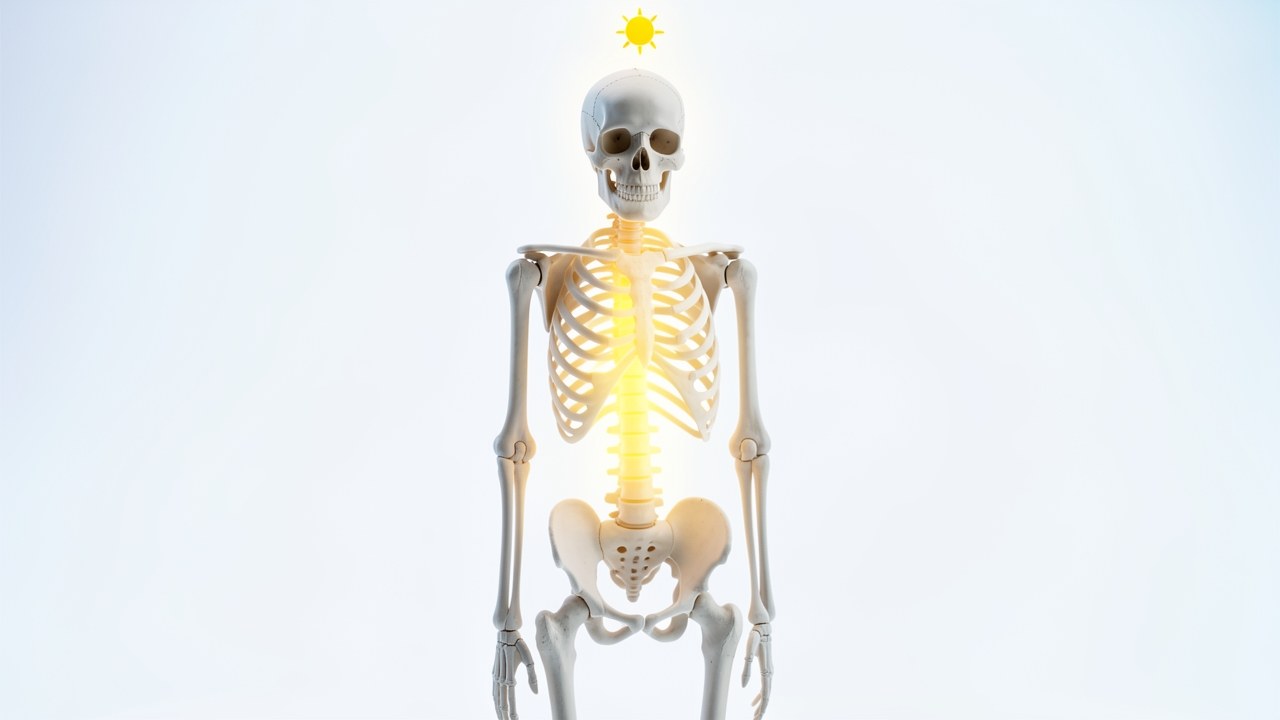
The Basics: What Vitamin D Does in Your Body
Vitamin D is a fat-soluble nutrient that acts like a hormone in many tissues. Its most recognized job is keeping blood calcium and phosphate in balance, which is essential for building and maintaining strong bones.
Beyond bone, vitamin D influences how muscles work, how the immune system responds, and even how the brain functions. Many cells throughout the body have receptors for vitamin D, which is why researchers are studying its potential for far-reaching effects.
- Helps regulate calcium and phosphate levels.
- Supports bone mineralization and remodeling.
- Plays a role in immune modulation and muscle function.
- May influence metabolic and neurological processes.
Sources: Harvard T.H. Chan School of Public Health, Nutrients (MDPI), Physiopedia
Vitamin D and Bone Health
The strongest and most established benefit of vitamin D is its role in bone health. It is essential for calcium absorption from the gut and for the proper mineralization of bone tissue. Without enough vitamin D, bones can become weak and brittle over time.
Vitamin D deficiency increases the risk of osteoporosis, a condition where bones lose density and are more prone to fractures. For older adults, inadequate vitamin D is linked to weaker muscles and a greater risk of falls, which can lead to fractures.
Researchers have shown that vitamin D supplementation can reduce the risk of fractures. For example, a meta-analysis found that taking 800 IU of vitamin D per day together with 1,000 mg of calcium significantly reduced hip fracture risk. Conversely, a lower dose of 400 IU per day did not show the same benefit for lowering osteoporosis risk.
- Vitamin D is crucial for calcium absorption and bone mineralization.
- Deficiency contributes to osteoporosis and increased fracture risk.
- Supplementation with 800 IU/day plus calcium reduced hip fracture risk in trials.
- In older adults, vitamin D helps preserve muscle strength and reduce falls.
Sources: Harvard T.H. Chan School of Public Health, Nutrients (MDPI), Antioxidants (MDPI)
Immune System Support
Vitamin D has been shown to modulate the immune system, with receptors present on many immune cells. This suggests it may help the body defend against infections and regulate inflammatory responses.
Even so, the evidence for vitamin D as a general immune booster is mixed. Some studies indicate a potential role in lowering the risk of respiratory infections, but results are inconsistent. Researchers continue to explore whether adequate vitamin D status can reduce the likelihood of colds, flu, and other infections.
One area of interest is the relationship between vitamin D and autoimmune diseases. Observational studies have linked higher vitamin D levels with a lower risk of conditions like multiple sclerosis, but the evidence is not yet conclusive enough to make recommendations.
- Vitamin D receptors are found on many immune cells.
- It helps regulate immune responses and may have anti-inflammatory effects.
- Evidence for reducing infection risk is mixed.
- Observational links to autoimmune diseases require more research.
Sources: Harvard T.H. Chan School of Public Health, UnitedHealthcare, Nutrients (MDPI)
Muscle Function and Falls Risk
Vitamin D is important for muscle function. Deficiency can lead to proximal muscle weakness, which is most noticeable in the thighs and hips. In older adults, this weakness contributes to balance problems and an increased likelihood of falls.
Falls are a major risk factor for fractures, especially in the elderly. Vitamin D supplementation has been shown to improve muscle strength and reduce fall risk in some randomized trials. Ensuring adequate vitamin D intake is a practical strategy to support mobility and independence in later life.
- Vitamin D deficiency causes muscle weakness, particularly in the legs.
- Weakness increases the risk of falls and fractures.
- Supplementation may improve muscle function and reduce fall risk.
- This is one of the most evidence-backed benefits of vitamin D.
Sources: Harvard T.H. Chan School of Public Health, Antioxidants (MDPI)
Potential Links to Chronic Disease
Beyond the skeleton, researchers have examined whether vitamin D influences risks of cancer, cardiovascular disease, and other chronic conditions. Some observational studies have reported associations between low vitamin D levels and a higher risk of certain cancers, including colorectal cancer, and heart attacks in men. However, these studies cannot prove cause and effect.
Randomized controlled trials have produced mixed results. For instance, a meta-analysis suggested that daily intakes of 400–800 IU might lower overall mortality by about 7%, but this finding carried limitations. Other potential links, such as a protective effect against type 2 diabetes or metabolic syndrome, remain unconfirmed.
Given the current science, the most reliable recommendation is to maintain adequate vitamin D status for bone health. The promise of preventing cancer or heart disease with vitamin D supplements has not been firmly established, and high hopes should be tempered by the evidence.
- Observational studies link low vitamin D to higher risk of colon cancer and heart attacks.
- Randomized trials have not consistently shown prevention benefits.
- A meta-analysis hinted at a mortality reduction, but with caveats.
- Evidence for autoimmune disease prevention is also observational and preliminary.
Sources: Harvard T.H. Chan School of Public Health, Nutrients (MDPI), Antioxidants (MDPI)
Mental Health and Mood
Vitamin D's connection to mental health has attracted significant attention because receptors are found in brain areas that regulate mood. Low vitamin D levels are common among people with depression, and some observational studies have linked lower levels with more severe symptoms.
A recent meta-analysis of randomized trials found that vitamin D supplementation led to a moderate but statistically significant improvement in depressive symptoms, with a standardized mean difference of -0.36. This suggests that correcting a deficiency may be a helpful adjunct to standard depression treatment.
People who are deficient may experience the most benefit, but experts caution that vitamin D is not a replacement for prescribed therapies. The evidence for its role in preventing depression or improving overall well-being in everyone remains limited.
- Vitamin D deficiency is more common in those with depression.
- Supplementation has shown modest benefits in clinical trials.
- Improvement may be largest among those with baseline deficiency.
- Vitamin D is not a substitute for professional mental health care.
Sources: PMC (US National Library of Medicine), Frontiers in Psychiatry, UnitedHealthcare
Evidence Quality and Limitations
When reading about vitamin D benefits, it's important to distinguish between associations and proven effects. The strongest evidence is for bone health and fall prevention, where randomized trials have shown clear benefits.
For other conditions—such as cancer, heart disease, immune function, and depression—research often relies on observational studies, which can be influenced by confounding factors. While meta-analyses of trials hint at benefits, they also carry limitations, and the scientific community emphasizes that more rigorous research is needed.
High-dose supplements are not without risk. Intakes above 2,000 IU per day are generally not recommended because of safety concerns. Always consult a healthcare provider before starting a supplement, especially if you have medical conditions or are taking other medications.
- Bone and fall evidence is robust; other benefits are promising but not definitive.
- Observational studies cannot prove causation.
- Future trials may clarify the role of vitamin D in chronic disease.
- Avoid very high doses—more is not better.
Sources: Harvard T.H. Chan School of Public Health, Nutrients (MDPI), Antioxidants (MDPI), Frontiers in Psychiatry
Frequently asked questions
Does vitamin D really help with bone health?
Yes. Vitamin D is essential for calcium absorption and bone mineralization. Deficiency can lead to osteoporosis and fractures. Supplementation with 800 IU/day plus calcium was shown to reduce hip fracture risk in a meta-analysis, providing high-confidence support for its bone benefits.
Sources: Harvard T.H. Chan School of Public Health, Nutrients (MDPI)Can vitamin D boost my immune system?
Vitamin D helps modulate immune responses, with receptors on many immune cells. Some studies suggest it may reduce the risk of infections, but the evidence is mixed. It's not a guaranteed immune booster, but maintaining adequate levels appears beneficial for overall immune health.
Sources: Harvard T.H. Chan School of Public Health, UnitedHealthcareIs vitamin D linked to depression?
Observational studies show that low vitamin D levels are more common in people with depression, and a recent meta-analysis found that supplementation modestly improves depressive symptoms. However, it is not a replacement for standard treatments, and more research is needed to clarify who benefits most.
Sources: PMC (US National Library of Medicine), Frontiers in PsychiatryCan vitamin D prevent cancer?
Observational studies have associated higher vitamin D status with a lower risk of certain cancers, such as colorectal cancer. However, randomized trials have not consistently confirmed a protective effect. The evidence is not strong enough to claim that vitamin D prevents cancer.
Sources: Harvard T.H. Chan School of Public Health, Nutrients (MDPI)How much vitamin D do I need for benefits?
For bone health and fall prevention, a daily dose of 800 IU has been shown to be effective in research. Intakes of 400 IU per day may be insufficient. The upper safety limit often cited is 2,000 IU per day, with higher doses generally not recommended unless a doctor prescribes them. Individual needs vary, so check with a healthcare provider.
Sources: Harvard T.H. Chan School of Public HealthSources
- Ask the expert: Vitamin D and chronic disease — Harvard T.H. Chan School of Public Health
- Vitamin D and Depression: Where is all the Sunshine? — PMC (US National Library of Medicine)
- Vitamin D and the Effect on Mental Health - Physiopedia — Physiopedia
- Vitamin D benefits — UnitedHealthcare
- Meta-analysis of the effect of vitamin D on depression — Frontiers in Psychiatry
- Vitamin D: Evidence-Based Health Benefits and Recommendations for Population Guidelines — Nutrients (MDPI)
- The Multiple Effects of Vitamin D against Chronic Diseases: From Reduction of Lipid Peroxidation to Updated Evidence from Clinical Studies — Antioxidants (MDPI)