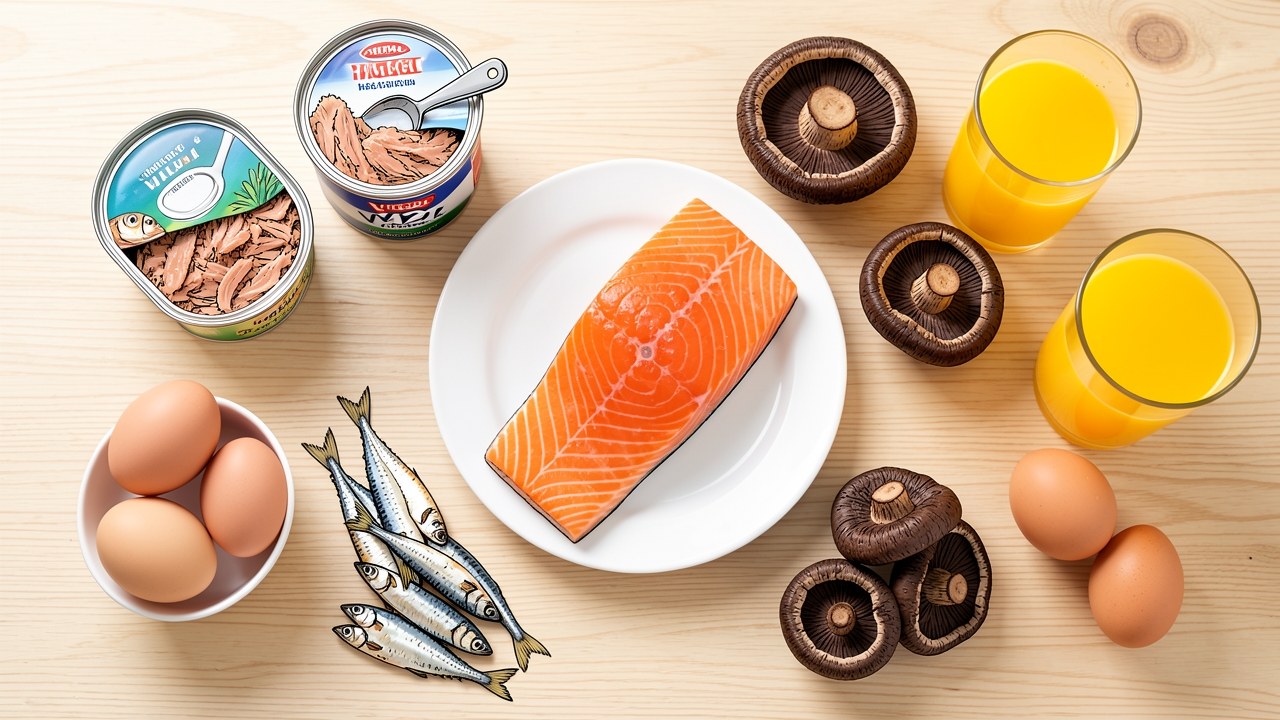
Vitamin D in Food: An Overview
Vitamin D is essential for bone health and many other functions, yet it is found in a limited number of foods. For most Americans, getting enough from diet alone is a challenge, but knowing which foods offer the most can help you plan meals that contribute meaningfully to your daily target.
This guide covers natural sources, fortified foods, plant-based options, and practical tips for maximizing your dietary vitamin D. Values are based on standard serving sizes from nutrition databases and may vary by brand, preparation, and growing conditions.
Natural Food Sources
Fatty fish are the standout natural sources of vitamin D. For example, farmed rainbow trout provides about 645 IU per 3-ounce cooked serving, while sockeye salmon offers around 570 IU for the same size. Canned light tuna is lower, with about 40 IU per 3 ounces, and sardines canned in oil contain roughly 46 IU per 2 sardines.
Egg yolks also contribute, with one large egg providing about 44 IU. Cod liver oil is exceptionally concentrated, delivering approximately 1,360 IU per tablespoon.
Keep in mind that fish values can differ between wild and farmed varieties, and the season may play a role. The numbers shown are representative averages from nutrient databases.
Sources: National Institutes of Health, Office of Dietary Supplements
Fortified Foods
In the United States, fortified foods help many people increase their vitamin D intake. Milk is commonly fortified, providing about 120 IU per cup, and this applies to most dairy milk varieties. Fortified plant-based milks, such as soy, almond, or oat, typically contain between 100 and 144 IU per cup, making them a useful alternative for those avoiding dairy.
Breakfast cereals are often fortified as well, with some brands offering about 80 IU per serving, although levels vary. Some orange juice brands are also fortified, but this is voluntary and not universal, so it is important to check the nutrition label.
Not all dairy products are fortified. Cheese and ice cream generally are not, so they are not reliable sources of vitamin D.
Sources: National Institutes of Health, Office of Dietary Supplements, USDA
Plant-Based Options
For vegetarians and vegans, the best natural plant-based source is UV-exposed mushrooms. These mushrooms are treated with ultraviolet light to increase their vitamin D content, and a half-cup serving can provide about 366 IU. Regular mushrooms, however, contain little to no vitamin D unless they have been specifically UV-treated.
Apart from UV-exposed mushrooms, most fruits and vegetables are not significant sources of vitamin D. This means that plant-based eaters will likely need to rely on fortified foods or supplements to meet their needs.
- When buying mushrooms, look for labels that mention "UV-treated" or "vitamin D" to ensure they contain meaningful amounts.
- Fortified plant milks (soy, almond, oat) are practical ways to add vitamin D to a plant-based diet.
Sources: National Institutes of Health, Office of Dietary Supplements, GoodRx
Reference Table: Vitamin D in Foods
The table below summarizes vitamin D content in common food sources.
| Food | Serving | Vitamin D (IU) | Source type |
|---|---|---|---|
| Cod liver oil | 1 tablespoon | 1,360 | Natural |
| Rainbow trout (farmed) | 3 ounces cooked | 645 | Natural |
| Sockeye salmon | 3 ounces cooked | 570 | Natural |
| UV-exposed white mushrooms | 1/2 cup sliced | 366 | Plant-based |
| Fortified milk (2%) | 1 cup | 120 | Fortified |
| Fortified plant milk (soy/almond/oat) | 1 cup | 100–144 | Fortified |
| Fortified ready-to-eat cereal | 1 serving (varies) | 80–145 | Fortified |
| Egg yolk (large egg) | 1 yolk | 40–44 | Natural |
| Beef liver | 3 ounces cooked | 42 | Natural |
| Canned sardines (Atlantic) | 2 sardines | 46 | Natural |
| Canned light tuna | 3 ounces | 40 | Natural |
Sources: National Institutes of Health, Office of Dietary Supplements, USDA, GoodRx
Sample Meal Ideas
Incorporating vitamin D–rich foods into your daily meals doesn't have to be complicated. Here are some practical ideas that combine natural and fortified sources:
These meal ideas are meant to inspire your own menus; full recipes with quantities are not provided here, but the combinations are simple and adaptable.
- Breakfast: Fortified cereal with milk or fortified plant milk, topped with sliced strawberries and a boiled egg.
- Lunch: A salad with grilled sockeye salmon, mixed greens, cherry tomatoes, and a side of fortified yogurt.
- Dinner: Baked rainbow trout with roasted potatoes and sautéed UV-exposed mushrooms.
- Snack: Whole-grain crackers with canned sardines and a glass of fortified orange juice.
Sources: National Institutes of Health, Office of Dietary Supplements
How Much Vitamin D Is in Your Diet?
Typical American diets often fall short of the recommended daily intake, which is 600–800 IU for most adults. According to available data, the average intake from food is only about 150–250 IU per day, underscoring the difficulty of meeting needs through diet alone. This highlights the importance of choosing vitamin D–rich foods regularly and considering fortified options.
To gauge your intake, you can use the values in this guide and the nutrition labels on packaged foods. Remember that the amounts in fish and other natural sources can vary, so your daily total may fluctuate.
Sources: National Institutes of Health, Office of Dietary Supplements
How to Read Nutrition Labels for Vitamin D
Nutrition labels are your most reliable tool for knowing how much vitamin D a food provides. In the United States, the label lists vitamin D in micrograms (mcg) and as a Percent Daily Value (%DV).
To compare foods, check the serving size and the amount of vitamin D per serving. For fortified foods, the label will also list whether vitamin D was added.
For supplements, the label may list vitamin D in IU (International Units) or mcg. To convert, use 1 mcg = 40 IU, so 15 mcg equals 600 IU.
Sources: National Institutes of Health, Office of Dietary Supplements
Tips for Maximizing Absorption
Vitamin D is fat-soluble, meaning your body absorbs it better when consumed with fat. Pairing vitamin D–rich foods with a source of fat—such as olive oil, avocado, nuts, or butter—can support absorption.
Combining foods that naturally contain fat with vitamin D sources is a simple strategy: enjoy salmon with a drizzle of olive oil, add eggs to a vegetable stir-fry cooked in oil, or have fortified milk with a handful of almonds.
No evidence suggests that cooking destroys vitamin D. For practical purposes, you can prepare vitamin D–rich foods as you normally would, but dietary fat is needed for absorption.
Sources: National Institutes of Health, Office of Dietary Supplements, ISDIN, CU Anschutz Medical Campus
Frequently asked questions
Are fortified foods a good source of vitamin D?
Yes, fortified foods such as milk and some plant milks are reliable sources, providing about 100–144 IU per cup. Breakfast cereals and orange juice may also be fortified, but amounts vary, so checking labels is important.
Sources: National Institutes of Health, Office of Dietary SupplementsCan I get enough vitamin D from food alone?
For most adults, it is difficult to reach the recommended 600–800 IU daily through food alone because typical diets provide only 150–250 IU per day. Fatty fish and fortified foods help, but you may need supplementation or sun exposure to meet your needs.
Sources: National Institutes of Health, Office of Dietary SupplementsWhat are the best vegan sources of vitamin D?
The best vegan sources are UV-exposed mushrooms, which can provide about 366 IU per half cup, and fortified plant milks (about 100–144 IU per cup). Since most plant foods are not naturally rich in vitamin D, fortified options are key.
Sources: National Institutes of Health, Office of Dietary SupplementsIs vitamin D destroyed by cooking?
No, the evidence does not suggest that typical cooking destroys vitamin D. For practical purposes, you can prepare vitamin D–rich foods as you normally would, though dietary fat is needed for absorption.
Sources: National Institutes of Health, Office of Dietary Supplements, ISDINSources
- Vitamin D - Health Professional Fact Sheet — National Institutes of Health, Office of Dietary Supplements
- Nutrients: Vitamin D (IU) — USDA
- Top 5 Foods With Vitamin D (And Why Your Skin Might Thank You) — ISDIN
- 13 Best Foods High in Vitamin D — GoodRx
- Vitamin D: Benefits, Food Sources, Deficiency Signs and Daily Recommendations — CU Anschutz Medical Campus