Understanding the Two Forms of Vitamin D
Vitamin D is a fat-soluble nutrient that exists in several forms. The two most common in supplements and fortified foods are vitamin D2 (ergocalciferol) and vitamin D3 (cholecalciferol). While both can help you maintain adequate vitamin D status, they are not identical. Vitamin D2 and D3 differ primarily in their chemical structure, how they are produced, and their natural dietary sources. These differences can influence how each form behaves in the body, especially when it comes to raising and maintaining blood levels of 25-hydroxyvitamin D [25(OH)D], the form doctors typically measure to assess vitamin D status.
Sources: National Institutes of Health Office of Dietary Supplements (NIH ODS)
How Vitamin D2 and D3 Are Made
Vitamin D2 is manufactured by irradiating ergosterol, a compound found in yeast, with ultraviolet (UV) light. Vitamin D3, on the other hand, is typically produced by irradiating 7-dehydrocholesterol, a substance derived from lanolin, which is the oil extracted from sheep's wool. An animal-free version of vitamin D3, sourced from lichen, is also available for those who prefer a vegan option.
Sources: National Institutes of Health Office of Dietary Supplements (NIH ODS)
Dietary Sources of Vitamin D2 vs D3
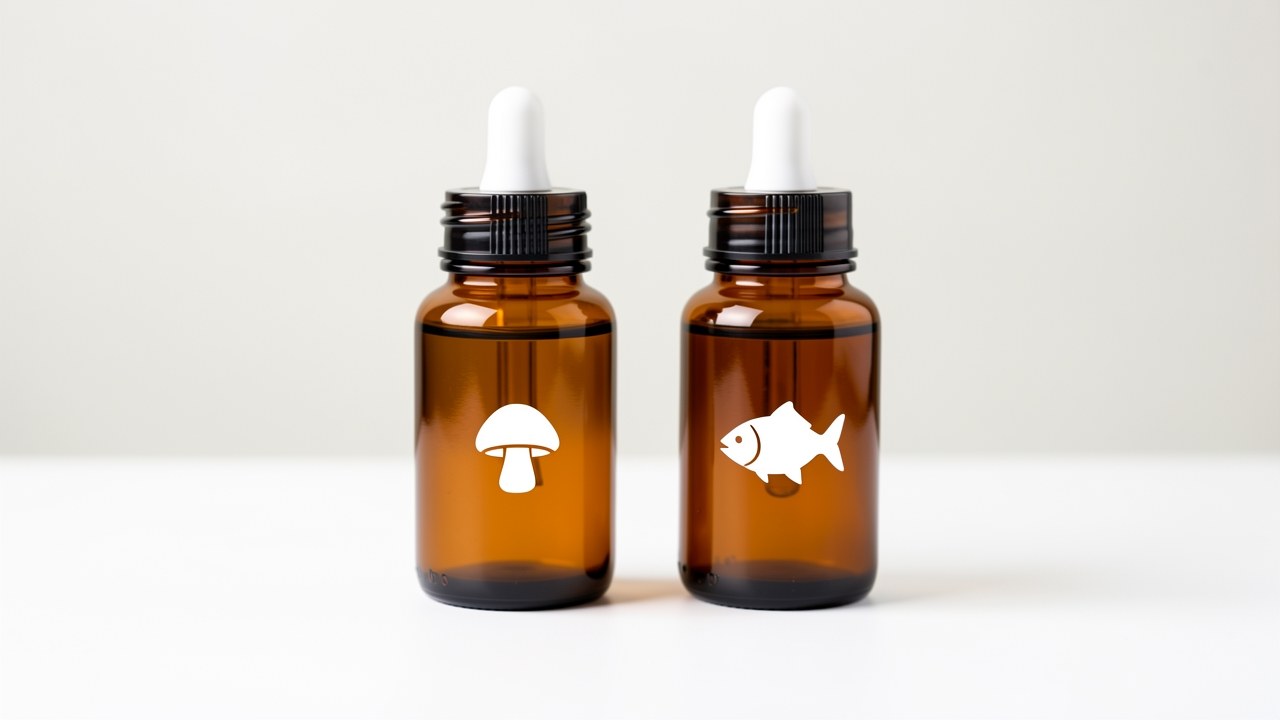
In nature, vitamin D2 is found in certain mushrooms and yeast that have been exposed to ultraviolet light. Foods like UV-treated portobello mushrooms can provide vitamin D2. Vitamin D3, however, is found in animal-based foods such as fatty fish (salmon, mackerel, tuna), fish liver oils, egg yolks, and beef liver. Moreover, vitamin D3 is the form your skin produces when exposed to sunlight's ultraviolet B (UVB) rays.
- Food sources of vitamin D2: UV-exposed mushrooms, other UV-exposed fungi.
- Food sources of vitamin D3: fatty fish, fish liver oil, egg yolks, beef liver.
Sources: National Institutes of Health Office of Dietary Supplements (NIH ODS)
Absorption and Metabolism: How Each Form Works in the Body
Both vitamin D2 and D3 are well absorbed in the small intestine. After absorption, they are transported to the liver, where they undergo hydroxylation. Vitamin D2 is converted to 25-hydroxyvitamin D2, while vitamin D3 becomes 25-hydroxyvitamin D3. These forms are then further processed in the kidneys to the active hormone, calcitriol. Despite sharing these steps, subtle differences in their metabolism and binding can lead to different effects on blood levels.
Sources: National Institutes of Health Office of Dietary Supplements (NIH ODS)
Effectiveness in Raising and Maintaining Blood Levels
Multiple studies and meta-analyses have compared the efficacy of D2 and D3. A 2021 systematic review and meta-analysis of 24 studies concluded that vitamin D3 was more effective than vitamin D2 in raising total 25(OH)D levels, with a mean difference of 15.69 nmol/L. The same review also found that vitamin D3 was more effective in reducing parathyroid hormone (PTH) levels, a marker of vitamin D adequacy. However, not all studies show a clear advantage. A 2013 study in healthy adults found that taking 1000 IU of either D2 or D3 daily for 11 weeks produced similar increases in total 25(OH)D. Additionally, a 2022 retrospective study using injectable forms found that a D3 injection raised serum vitamin D by a mean of 6.1 ng/ml compared to 3.2 ng/ml for a D2 injection, even when the D2 dose was twice the amount (600,000 U vs 300,000 U). This suggests that D3 may be more potent when given in large doses. The National Institutes of Health (NIH) notes that most evidence indicates vitamin D3 raises serum 25(OH)D to a greater extent and maintains those higher levels longer than vitamin D2.
Sources: Nutrients (MDPI), The Journal of Clinical Endocrinology & Metabolism (Endocrine Society), National Institutes of Health Office of Dietary Supplements (NIH ODS), Qatar Medical Journal
Considerations for Vegans and Vegetarians
Since conventional vitamin D3 is derived from lanolin (sheep's wool), many vegans and vegetarians prefer vitamin D2, which is always animal-free. However, lichen-derived vitamin D3 offers a vegan-friendly alternative. Lichen is a composite organism that is not an animal, and it can produce vitamin D3. Thus, you can find vitamin D3 supplements that are suitable for vegan diets. If you follow a plant-based diet, you may have a higher risk of low vitamin D levels because the best natural sources (fatty fish, egg yolks) are animal-based. Be sure to check supplement labels for the source of vitamin D3.
Sources: National Institutes of Health Office of Dietary Supplements (NIH ODS), Cleveland Clinic
recommendations on form preference
Professional organizations and health experts generally recommend vitamin D3 over D2 for supplementation. For instance, Cleveland Clinic physicians state that vitamin D3 is generally more effective and longer-acting than D2. An endocrinologist at Columbia University Irving Medical Center notes that most doctors recommend D3 because it is slightly more active and effective. However, this does not mean D2 is ineffective. In the United States, vitamin D2 is the form traditionally available as a high-dose prescription (e.g., 50,000 IU capsules), while D3 is more common in over-the-counter supplements. If a healthcare provider prescribes high-dose vitamin D, they may choose D2 due to insurance or availability, but this does not imply D3 is inferior.
Sources: Cleveland Clinic, Qatar Medical Journal, Columbia University Irving Medical Center
Side-by-Side Comparison: D2 vs D3
The table below summarizes the key similarities and differences between vitamin D2 and D3 based on the evidence from this guide.
| Attribute | Vitamin D2 (Ergocalciferol) | Vitamin D3 (Cholecalciferol) |
|---|---|---|
| Primary production method | UV irradiation of ergosterol from yeast | UV irradiation of 7-dehydrocholesterol from lanolin (or lichen for animal-free) |
| Natural dietary sources | Mushrooms (including UV-exposed), yeast | Fatty fish, fish liver oils, egg yolks, beef liver; also made in skin from sunlight |
| Absorption | Well absorbed in the small intestine | Well absorbed in the small intestine |
| Metabolized to | 25-hydroxyvitamin D2 | 25-hydroxyvitamin D3 |
| Efficacy in raising 25(OH)D | Less efficacious than D3 according to meta-analysis | More efficacious than D2 according to meta-analysis |
| Typical availability | Prescription high-dose (e.g., 50,000 IU) and some OTC | Mostly over-the-counter in lower doses; can be prescribed |
| Animal-free option | Yes | Yes, if lichen-derived |
Sources: National Institutes of Health Office of Dietary Supplements (NIH ODS), Nutrients (MDPI), Cleveland Clinic, The Journal of Clinical Endocrinology & Metabolism (Endocrine Society)
How to Choose Between D2 and D3
For most people, vitamin D3 appears to be the more effective choice based on current evidence. It tends to raise blood levels of 25(OH)D higher and sustain them longer. If you follow a vegan or vegetarian diet, look for lichen-derived vitamin D3 to align with your preferences while still getting the potentially more beneficial form. Vitamin D2 is still an adequate form, especially when used at the high prescription doses. The choice also depends on availability and cost. Over-the-counter vitamin D2 is less common but exists; check labels. Always consult your healthcare provider before starting a supplement, especially at high doses, to avoid overdose and ensure you address any underlying deficiency.
Sources: National Institutes of Health Office of Dietary Supplements (NIH ODS), Nutrients (MDPI), Cleveland Clinic
Frequently asked questions
Is vitamin D3 more potent than D2?
Most evidence indicates that vitamin D3 is more effective at raising and maintaining blood levels of 25-hydroxyvitamin D than vitamin D2. A 2021 meta-analysis found D3 to be more efficacious, and the NIH notes that D3 raises serum levels to a greater extent and for longer. However, at low daily doses (e.g., 1000 IU), a 2013 study saw similar increases for both forms. So while D3 appears more potent in many contexts, the difference is not always significant.
Sources: Nutrients (MDPI), National Institutes of Health Office of Dietary Supplements (NIH ODS), The Journal of Clinical Endocrinology & Metabolism (Endocrine Society)Which form of vitamin D is best for vegans?
Vitamin D2 is always vegan, as it is derived from yeast. Vitamin D3 is often made from lanolin (sheep's wool), so it is not vegan. However, there is a vegan-friendly vitamin D3 derived from lichen, which is plant-like. For vegans, look for vitamin D3 explicitly labeled as 'lichen-derived' or choose vitamin D2 if you prefer the conventional form.
Sources: National Institutes of Health Office of Dietary Supplements (NIH ODS)Can I switch between D2 and D3?
Yes, you can switch, but it is best to do so under the guidance of a healthcare provider. Both forms work to improve vitamin D status, but D3 is generally preferred because it may be more effective. If switching from a prescription high-dose D2 to an over-the-counter D3, your doctor may adjust the dose to achieve and maintain target levels. There is no known safety issue in switching, but consistency and monitoring are key.
Sources: Cleveland ClinicWhy do some supplements contain D2 instead of D3?
Vitamin D2 is the form traditionally used in high-dose prescription supplements, such as 50,000 IU capsules, and it is also used in some over-the-counter products and fortified foods. Reasons include historical precedent in the US (prescription D2 was the standard) and the fact that D2 can be produced more easily from plant sources, which may appeal to vegans. However, many experts now prefer D3 for new products.
Sources: Cleveland ClinicSources
- Vitamin D - Health Professional Fact Sheet — National Institutes of Health Office of Dietary Supplements (NIH ODS)
- Vitamin D vs. D3: What’s the Difference? — Cleveland Clinic
- Effectiveness of vitamin D2 compared with vitamin D3 replacement therapy in a primary healthcare setting: a retrospective cohort study — Qatar Medical Journal
- What's the Deal with Vitamin D? — Columbia University Irving Medical Center
- Relative Efficacy of Vitamin D2 and Vitamin D3 in Improving Vitamin D Status: Systematic Review and Meta-Analysis — Nutrients (MDPI)
- Serum Concentrations of 1,25-Dihydroxyvitamin D2 and 1,25-Dihydroxyvitamin D3 in Response to Vitamin D2 and Vitamin D3 Supplementation — The Journal of Clinical Endocrinology & Metabolism (Endocrine Society)