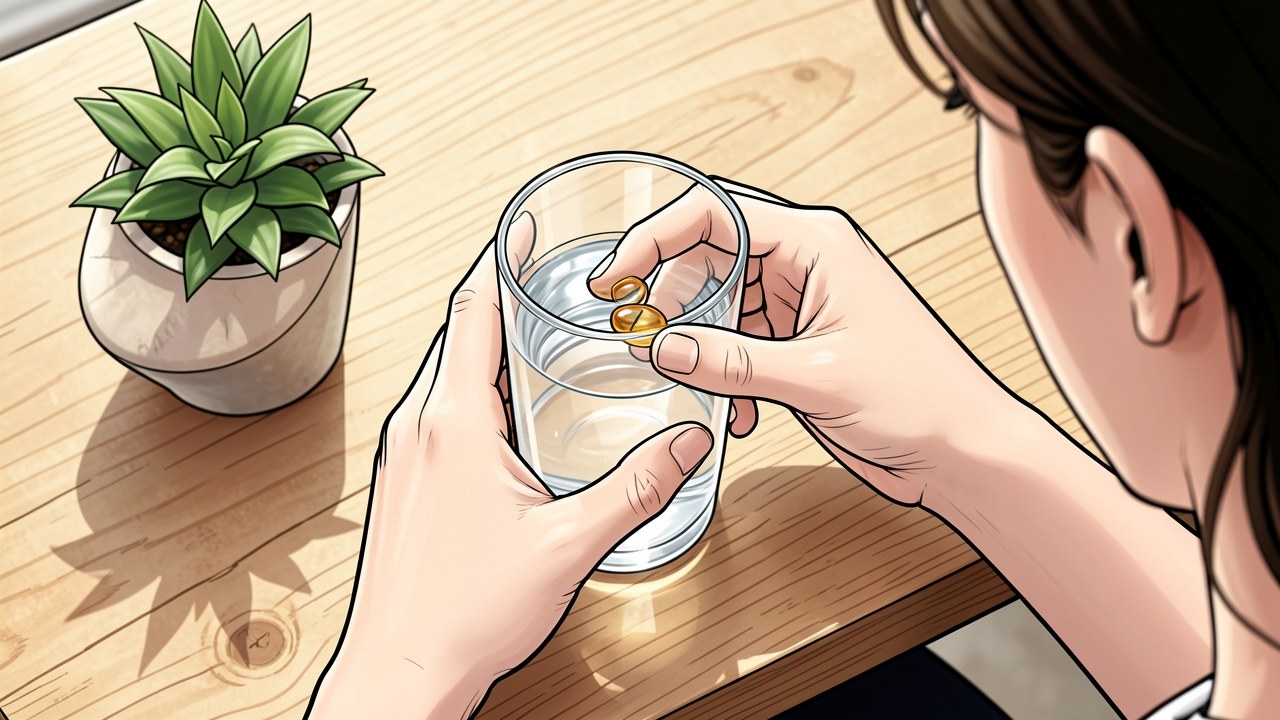
Confirming Your Deficiency: Blood Tests
Before beginning treatment, your healthcare provider will confirm a vitamin D deficiency with a simple blood test measuring serum 25-hydroxyvitamin D, often abbreviated as 25(OH)D. In adults, a level below 20 ng/mL is typically considered deficient, while some clinicians aim for a target above 30 ng/mL during treatment.
Tests are especially important because symptoms of deficiency can be subtle or overlap with other conditions. Your provider will interpret the result in light of your health history, age, and risk factors.
| Status | 25(OH)D Level |
|---|---|
| Deficient | Below 20 ng/mL |
| Insufficient | 20–29 ng/mL |
| Sufficient (target for many) | 30 ng/mL or higher |
Sources: clinicaltrials.eu
Understanding Treatment Goals and Target Levels
The primary goal of treatment is to raise your blood level of vitamin D to a sufficient range and to prevent the health problems associated with deficiency, such as bone loss and increased fracture risk. However, the optimal target level is not universally agreed upon. While many guidelines use a threshold of 30 ng/mL for treatment success, a 2024 Endocrine Society guideline noted that current clinical trial evidence does not permit establishing a specific 25(OH)D level that reliably predicts benefit. Your doctor will help set a target based on your individual health, age, and risk factors.
Sources: Medscape, clinicaltrials.eu
Treatment Options: Supplements vs. Natural Sources
For a diagnosed deficiency, supplements are the most effective and reliable way to raise your levels. Vitamin D is available in two forms: vitamin D2 (ergocalciferol) and vitamin D3 (cholecalciferol). Research suggests that vitamin D3 is generally more effective at raising and maintaining blood levels than vitamin D2. Most over-the-counter supplements contain D3, but some prescription formulations use D2. Your provider can recommend the best type and dose for you.
While you can get some vitamin D from sunlight and foods, diet and sun exposure alone are rarely sufficient to correct a deficiency. Fatty fish, fortified dairy products, and egg yolks are good sources, but it is very difficult to consume enough through food to bring a deficient level into a healthy range. Therefore, the primary treatment for deficiency is supplementation, then you can use diet and sensible sun exposure to help maintain healthy levels once corrected.
Sources: Cleveland Clinic, clinicaltrials.eu
Typical Treatment Doses and Duration
Treatment protocols vary depending on your age, weight, and how severe your deficiency is. For adults, a common protocol is 50,000 IU of vitamin D2 or D3 taken once a week for eight weeks. Alternatively, many guidelines suggest taking 6,000 IU daily for eight weeks. After these initial high-dose treatments, your doctor will recheck your blood to see if your level has reached the target. If it has not, the high-dose course may be repeated.
For children and adolescents aged 1–18 years, a typical treatment is 2,000 IU daily for at least six weeks, or 50,000 IU once weekly for at least six weeks. For infants under one year, treatment is usually 2,000 IU daily for six weeks. Always follow your pediatrician's instructions.
- Adults: 50,000 IU weekly for 8 weeks, or 6,000 IU daily for 8 weeks.
- Children (1–18 years): 2,000 IU daily or 50,000 IU weekly for at least 6 weeks.
- Infants (under 1 year): 2,000 IU daily for 6 weeks.
- Adults with obesity or malabsorption: higher initial doses of 6,000–10,000 IU daily may be needed.
| Group | Treatment Dose | Duration |
|---|---|---|
| Adults | 50,000 IU weekly (D2 or D3) | 8 weeks |
| Adults (alternative) | 6,000 IU daily | 8 weeks |
| Adults with obesity or malabsorption | 6,000–10,000 IU daily | As directed |
| Children (1–18 years) | 2,000 IU daily | At least 6 weeks |
| Children (alternative) | 50,000 IU weekly | At least 6 weeks |
| Infants (under 1 year) | 2,000 IU daily | 6 weeks |
Sources: Medscape, clinicaltrials.eu
What to Expect During Treatment
Treatment usually involves taking a relatively high dose of vitamin D for a set period, followed by a maintenance dose. The initial high-dose phase is meant to quickly rebuild your body's stores. In the weeks during this phase, you might not notice any immediate symptoms, but your blood levels will gradually rise. Obese individuals may see a smaller increase in their 25(OH)D level after the same dose compared to normal-weight people. For example, one study in adolescents found that after 8 weeks of treatment, obese participants had a mean increase of about 13.7 ng/mL, whereas normal-weight participants had an increase of about 21.9 ng/mL.
While side effects are uncommon with standard treatment doses, vitamin D toxicity can occur if you take excessive amounts, particularly mega-doses not prescribed by your doctor. Symptoms of toxicity include nausea, vomiting, and kidney stones. Always take your supplement exactly as directed and never exceed the recommended dose without medical supervision.
Sources: The Journal of Pediatrics, clinicaltrials.eu
Follow-Up Testing and Maintenance
After completing the initial treatment course, your doctor will recheck your 25(OH)D level. This follow-up is typically done 8–12 weeks after you start treatment. If your level is sufficient, you will transition to a maintenance dose to prevent the deficiency from returning. Maintenance doses for adults usually range from 1,500 to 2,000 IU per day. Some people may need to continue maintenance therapy indefinitely, especially if they have ongoing risk factors for deficiency.
The frequency of follow-up testing depends on your circumstances, but it is usually done at the transition point and then annually or as needed. Always keep your provider informed about any other supplements or medications you are taking, as they can affect vitamin D metabolism.
Sources: Medscape, clinicaltrials.eu
Frequently asked questions
How quickly can you fix a vitamin D deficiency?
With appropriate high-dose treatment, vitamin D levels can rise meaningfully within 8 weeks. In one trial, 72% of participants on 50,000 IU weekly and 56% on 5,000 IU daily achieved levels above 30 ng/mL after 8 weeks. The response varies by individual, baseline level, and other factors.
Sources: The Journal of Pediatrics, MedscapeWhat is the best way to raise vitamin D levels?
Supplements are the most effective way to correct a deficiency. Vitamin D3 is generally more effective than D2 at raising and maintaining blood levels. A typical adult protocol is 50,000 IU weekly for 8 weeks or 6,000 IU daily for 8 weeks, followed by a maintenance dose of 1,500–2,000 IU daily. Diet and sun exposure alone are usually not enough to treat a diagnosed deficiency.
Sources: Cleveland Clinic, Medscape, clinicaltrials.euCan you treat vitamin D deficiency with diet alone?
It is very difficult to treat a deficiency with food alone. While foods like fatty fish, fortified dairy, and egg yolks provide vitamin D, you would need to consume large amounts daily to raise your levels significantly. Supplements are the standard treatment for deficiency.
Sources: clinicaltrials.euHow often should I get my levels rechecked?
Your doctor will typically recheck your 25(OH)D level after completing the initial high-dose treatment, usually after 8 weeks. After that, they will decide on a maintenance dose and may recommend annual testing to ensure your levels stay in a healthy range. The exact schedule depends on your response and risk factors.
Sources: MedscapeSources
- Treatment of Vitamin D Deficiency in Predominantly Hispanic and Black Adolescents: A Randomized Clinical Trial — The Journal of Pediatrics
- Vitamin D Deficiency: Causes, Symptoms & Treatment — Cleveland Clinic
- Vitamin D Deficiency and Related Disorders Treatment & Management — Medscape
- Vitamin D deficiency – Treatment – Overview of Information and Clinical Research — clinicaltrials.eu